
Complete Lawn Renovation in Tampa Bay: How to Know When Repairs Stop Making Sense
A complete lawn renovation in Tampa Bay makes sense once repairs stop holding. Here are the exact thresholds our crew checks before we recommend a re-sod.
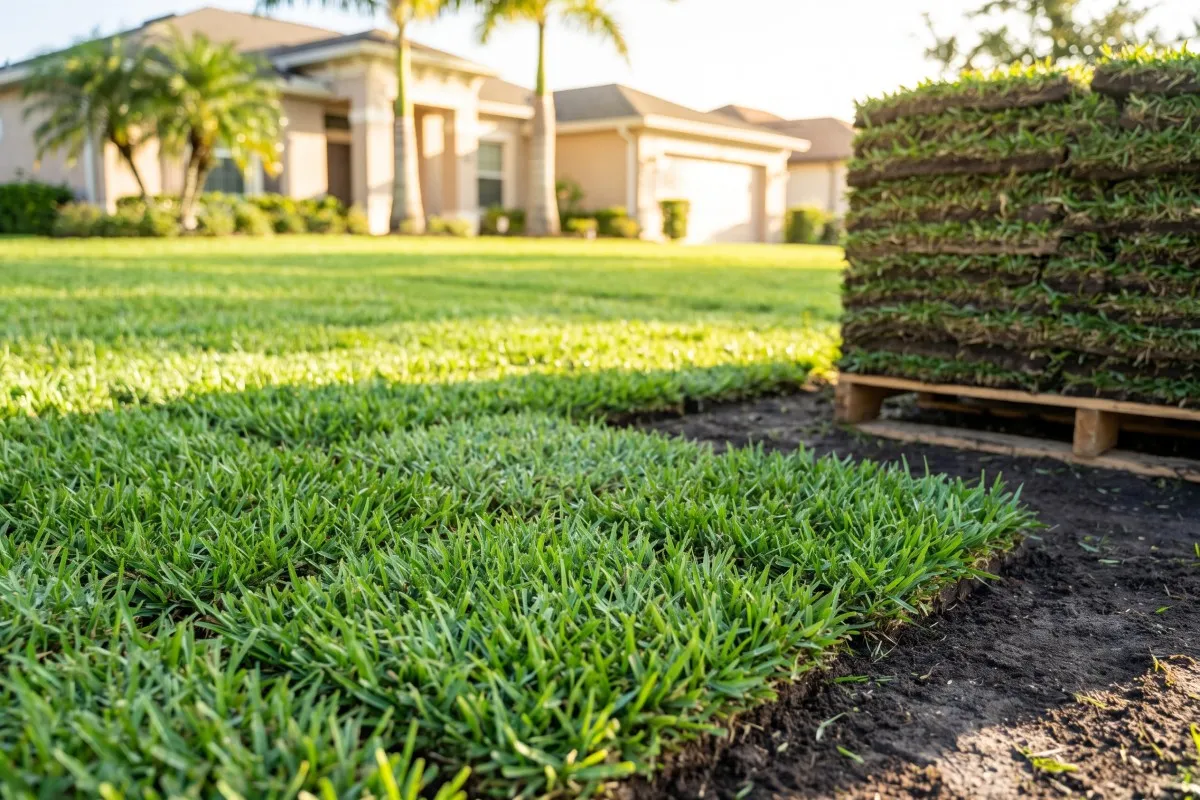
A complete lawn renovation in Tampa Bay makes sense the moment another repair stops paying for itself. That point is real. It arrives when the damage covers too much ground, or when it sits on soil that will kill the next patch just as surely as it killed the last one. We install sod across Riverview and Brandon, and the question we field most is a blunt one: is one more repair cycle worth it, or is it time to start clean? Usually we answer it on the first walk. A screwdriver and a tape measure do most of the talking. What follows is the same threshold-by-threshold check our project managers run before we ever recommend a re-sod.
Complete Lawn Renovation in Tampa Bay: Where the Line Sits
There is a rough industry line, and it holds up in the yards we walk. UF/IFAS puts it at about 30 percent: once weeds and bare ground cover roughly a third of a lawn, replacing it usually beats chasing it repair by repair. We treat that number as a starting gate, not a verdict. A yard sitting at 25 percent damage with a single fixable cause is worth saving. One at 30 percent with three overlapping problems almost never is.
The percentage alone never decides it. What matters more is the cause of the damage and whether that cause is still at work. So we walk four thresholds before we quote anything.
Threshold 1: How Much of the Lawn Is Actually Weeds
Start with an honest count, because weeds hide the true condition of a stand. Stand at the edge and estimate what share of the green is real turf versus everything else. If it reads under a third and the grass between the weeds is healthy, a targeted herbicide program and a few spot repairs will likely hold.
Past a point, spraying stops making sense. UF/IFAS advises that when more than 50 percent of what is growing is weeds, the practical move is a nonselective herbicide and a fresh start, because selective products cannot rescue a lawn that is more weed than grass. We see this most in older Floratam lawns that thinned under chinch bug pressure and let dollarweed and sedges move into the gaps. Once weeds own half the yard, you are maintaining their lawn, not yours.
If weeds are your main signal, our Florida lawn weed identification and control guide helps you name what you are fighting before you decide whether it is still winnable.
Threshold 2: Drainage That Keeps Failing
Water tells the truth about a yard. After a hard Tampa Bay summer storm, walk the lawn an hour later. Grass that stays spongy long after the rain, or holds standing water in the same low spots every storm, has a grading problem no amount of new sod will outgrow. Lay fresh turf over a spot that ponds, and you have bought a more expensive version of the same dead patch.
This is where a full renovation earns its cost. It is the one moment in a lawn’s life when we can correct the grade cheaply, before the new grass is in the way. We regrade to move water away from the house and toward the swales, then lay sod onto ground that finally drains. Chronic wet zones also breed disease. If large patch keeps returning in the same shady, soggy corner, drainage is usually the real defendant. Our rainy-season lawn care guide covers how standing water feeds fungus through our wettest months.
Threshold 3: The Soil Under the Grass
Grass only performs as well as the ground beneath it, and Central Florida’s sandy soil compacts more than people expect. UF/IFAS notes that turf in compacted soil roots shallow and stresses easily, and that bulk density above roughly 1.8 g/cm³ in sand physically stops roots from penetrating. Shallow roots mean a lawn that browns fast in drought and never fully recovers, patch after patch.
Test it yourself. Push a screwdriver six inches into the worst area. If it stalls in the first two or three inches against hard, dry ground while the grass beside it lifts with no root resistance at all, there is nothing for a repair to anchor into. Light compaction responds to core aeration and topdressing over a couple of seasons. Severe compaction under a mostly dead lawn is a renovation, because we can till and re-level the base before the new sod ever touches it.
Soil is also why we install sand-bottom sod rather than muck-grown turf. It matches our native sandy profile, so the seam at the root line knits in instead of fighting. We lay out the full reasoning in sand-bottom versus muck-bottom sod.
Threshold 4: Age, and the Patches That Keep Coming Back
The most telling threshold is not visual. It is history. A lawn you have repaired three summers running is not unlucky. It is telling you the cause was never fixed, or the stand has simply aged out. Older St. Augustine lawns thin naturally as thatch builds and the original vigor fades, and past a point each patch you drop in ages into the same tired turf around it.
Track your own repair log. Two isolated dog spots in five years is a healthy lawn. Recurring failures every wet season, spreading a little further each time, mean the problem is systemic. At that stage a fifth repair is the expensive choice, not the cheap one. It buys a few more months. A full re-sod resets the whole stand at once. When the damage is still contained, our bare and brown spot repair guide walks the targeted fixes that make sense.
What a Complete Renovation Actually Involves
Deciding to renovate is not the same as knowing what you are buying. Here is the sequence we follow, and the order matters as much as the steps do. UF/IFAS is blunt about site prep: the ground must be weed free and level, with the compaction relieved before a single piece of sod goes down. We work in exactly that order, because skipping ahead is how a renovation turns into a repair you end up paying for twice.
- Kill out the old stand and remaining weeds so nothing regrows through the new turf
- Correct grade and drainage, then relieve compaction and amend the base
- Cut the sod fresh the day we install it, and lay it edge to edge onto prepared, moist soil
Most residential renovations we run finish in a single day once the prep is done. Prep is the part that varies. A quarter-acre yard that only needs the old grass killed and a light grade might take an afternoon to make ready. One that needs regrading toward a swale and a full tiller pass to break the compaction can eat two days before any turf arrives on site. We match the grass to the site too, reading the sun and shade the yard actually gets and how hard it gets walked, rather than defaulting to whatever is on the truck. If you want the groundwork play-by-play, our soil grading and preparation guide shows what a good base looks like before the first square lands.
Why the Calendar Never Forces the Call
One worry we can retire: you do not have to wait for a season. The counties we serve sit in USDA Hardiness Zones 9b and 10a, where warm-season sod roots in every month of the year. Winter installs establish more slowly than July ones. They still establish. Our guide to year-round sod installation in Tampa Bay covers what shifts month to month.
Making the Call
The honest test is not how bad the lawn looks today. It is whether the cause is truly fixed, and whether the soil and grade can hold new grass at all. Then, how many times you have already paid to find out. When two or more of these thresholds point the same way, another repair is usually the costlier road.
If you want a straight read on where your yard falls, we will walk it with you anywhere from Valrico to Apollo Beach, run the same checks, and tell you plainly whether we would repair it or renovate it, before anyone talks price.

Fresh-cut sod installation, replacement, and delivery in the Tampa Bay area.
Continue reading
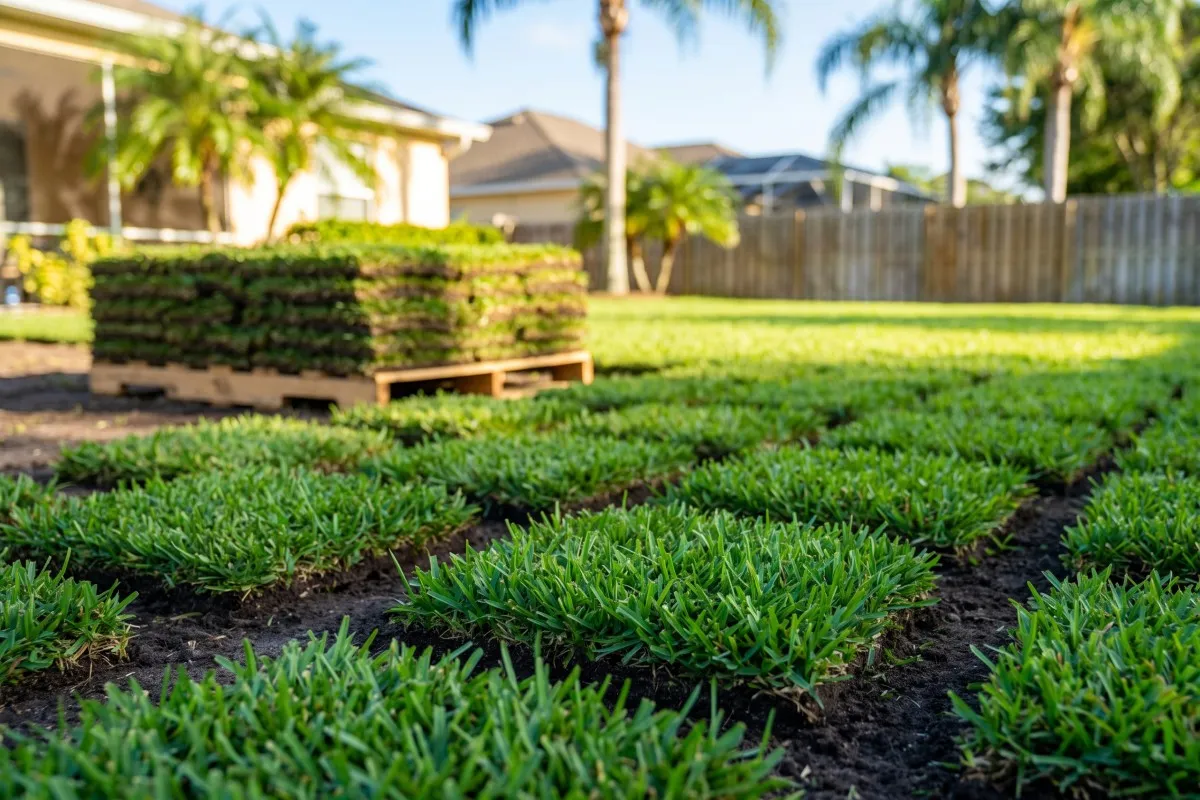
7 Questions to Ask Before Hiring a Sod Installer in Tampa Bay
The questions to ask a sod installer in Tampa Bay before you sign: seven that separate a real crew from a cheap one, from a family-owned team.
7 Sod Installation Mistakes Tampa Bay Homeowners Make (And How to Avoid Them)
The 7 sod installation mistakes Florida homeowners make most, what each one looks like weeks later, and how our Tampa Bay crews avoid every one.
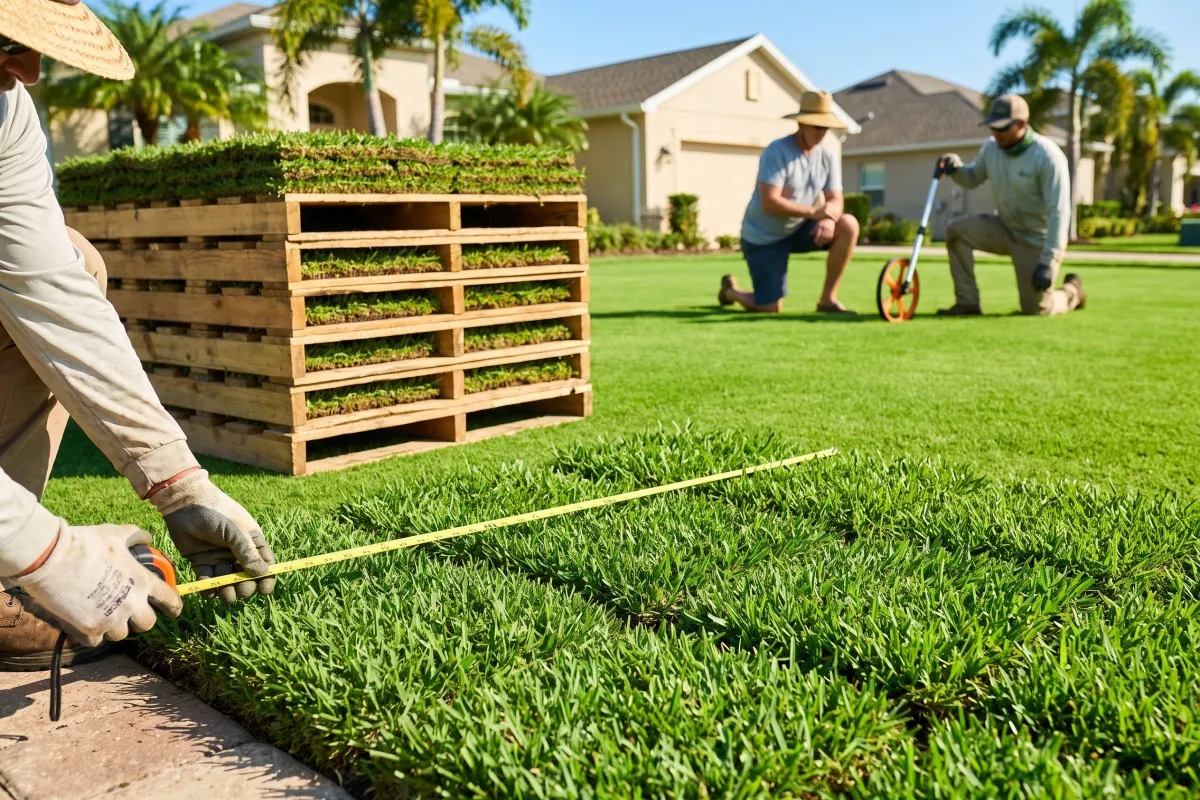
How Much Sod Do I Need? Measuring Your Tampa Bay Yard the Right Way
How much sod do I need? Measure your Tampa Bay yard the way our crews do: rectangles, deductions, a waste factor, then pallets.