
New Construction Sod Installation Tampa Bay: Builder Sod Fix
New construction sod installation in Tampa Bay done right: why builder sod fails in construction fill, and how fresh sand-bottom sod roots faster.
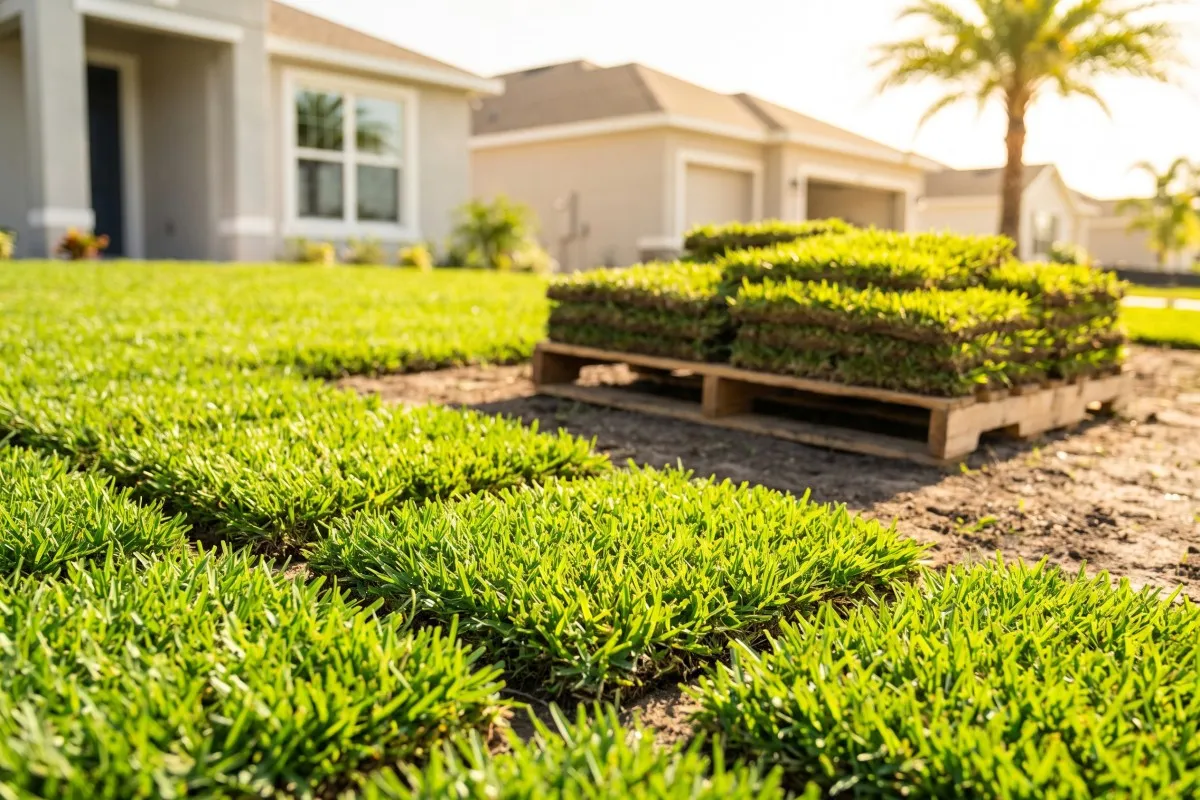
If you just closed on a house in Parrish, Apollo Beach, or Riverview and the front lawn already looks thin, you are not imagining it. New construction sod installation in Tampa Bay is the fix most builders skip, and the sparse turf they hand you is usually the cheapest sod laid on the worst-prepared ground on the whole lot. We walk these subdivisions every week. The pattern is consistent enough that we tell new buyers to plan on replacing builder grass, not nursing it.
Here is the direct answer before the details. Builder sod fails so often because it sits on compacted construction fill with the topsoil buried under it, and thin muck-grown squares cannot root into that. Fresh-cut sand-bottom sod on a properly loosened bed roots into the sandy ground it was grown to match. That is the whole difference, and it is why the swap is worth doing early instead of after a summer of watching bare patches spread.
Why builder-grade sod struggles in new construction fill
The trouble starts before the sod arrives.
Weeks of heavy equipment leave the soil driveway-hard
When your home was graded, heavy equipment ran over the lot for weeks. UF/IFAS research on newly developed residential communities found those soils are routinely so compacted they inhibit plant establishment and growth, and that the compaction has to be repaired by tillage before turf will take (UF/IFAS EP479). The top few inches of a new lot can pack down close to the density of a driveway.
The good dirt ends up buried under fill
There is a second insult underneath. To build a stable pad, crews bring in fill sand and spread it over the native ground, which buries whatever topsoil existed under the new grade (UF/IFAS LH012). So the sod your builder lays is resting on nutrient-poor fill, over compaction, with the good dirt sealed away below. Then the cheapest available sod goes down on top, often muck-grown for easy handling, and it gets watered on a framer’s schedule until you take the keys.
None of that is a grass-variety problem. It is a foundation problem wearing a green cover. The blades look fine on closing day and start thinning by the second month, because the roots never had anywhere to go.
New construction sod installation in Tampa Bay: our process
When we replace builder sod on a new lot, the grass is the last thing we handle. The dirt comes first, in a fixed order, because that order is what separates a lawn that holds from one you replace again in two years. On most residential lots across our service area the whole job fits inside a single day. You leave in the morning on tired builder grass and come home to a fresh lawn.
- Strip the builder sod down to bare ground. New roots have to meet soil, not a dead mat. We pull the thin existing squares and any weeds so the new sod knits into real dirt.
- Break the compaction. We loosen the packed top layer so roots can push down. UF/IFAS gives a field test anyone can run: try to push a thin rod into moist soil, and if it will not sink 6 inches without real force, the ground is too tight for turf (UF/IFAS LH012).
- Grade for drainage. We shape a fall of roughly 1 to 2 percent away from the slab so rain sheets toward the swale, and we account for the height the sod itself adds (UF/IFAS LH012).
- Lay fresh-cut sod the same morning it is cut. Sod is a living crop with a few days of stored energy. The sooner it goes from the field to your ground, the faster it roots.
That grading step matters more on a new lot than almost anywhere else, because builder pads are often set flush to walkways and driveways with no allowance for turf thickness. We map this the same way we do on any renovation, and it is worth reading our full walk-through of soil grading and prep before sod if you want to see how deep the prep goes.
Why sand-bottom sod is the right match for construction fill
The fill under your new lawn is sand. That is exactly the soil profile sand-bottom sod is grown on, and it is why we install it on every new-construction lot we touch. Grass raised on a sandy base sends roots that already know how to move through sandy ground, so they drive straight down into your fill instead of stalling at a boundary.
Where muck-grown sod goes wrong
Muck-grown sod does the opposite. It arrives on a dense, water-holding organic mat, and when that mat sits on top of sandy construction fill the two never marry. Water pools at the seam between them, roots stay shallow, and the lawn that looked lush on delivery thins out under its first hard rain. On a lot that already has compaction and buried topsoil working against it, that layering effect is the last thing you want to add.
Sand-bottom sod also drains the way your yard needs to drain. Central Florida’s summer downpours push fungal disease and root rot, and a porous sandy base keeps oxygen in the root zone instead of holding water against young roots.
You can replace builder sod any time of year here
A common worry from new buyers is that they missed some window. You did not. Central Florida sits in USDA hardiness zones 9b to 10a with a growing season near 330 days (USDA Plant Hardiness Zone Map), so warm-season sod is rooting and growing across most of the calendar. There is no dead season here where fresh sod simply will not take.
What changes with the season is the watering plan, not whether you can install. Summer installs lean on the rain and need careful attention so young roots do not stay soaked. Winter and dry-season installs need you to run the hose more, since the ground is drier and cooler. We adjust the aftercare either way and hand you a schedule built for the month you install in. If timing is on your mind, we lay out the full picture in our guide to year-round sod installation in Tampa Bay.
The practical case for doing it early is simple. A new lot’s compaction and buried topsoil do not fix themselves, and every month you keep watering failing builder grass is a month of water bills buying you a lawn you already plan to pull. Fixing the ground once, correctly, ends that.
What to ask before you replace builder sod
Not every quote for a new-construction lawn includes the part that matters. Some crews spray the old grass, lay new sod that afternoon, and call it a replacement. On compacted fill, that just repeats the problem. So ask first. Have any installer walk you through their prep before you compare prices, because the gap between a cheap bid and a good one almost always hides in whether the builder sod gets stripped and the compaction broken. That answer tells you more than the number does. It is the same set of questions worth asking any sod installer.
A lawn built on the ground under it
We will not promise you a specific outcome, and you should be cautious with anyone who does. What we will tell every new-construction customer is the same thing we tell everyone. Fresh-cut sand-bottom sod on a bed that has been stripped, loosened, and graded gives itself the best chance to root deep and hold through a Florida summer. The rest is water, which we hand off as its own plan.
Parrish, Apollo Beach, and Riverview are filling with new homes, and the lawns that come with them are rarely built to last. If you just moved into one anywhere across Hillsborough, Manatee, or Pinellas, we are glad to walk your lot and map the prep before you commit to anything.

Fresh-cut sod installation, replacement, and delivery in the Tampa Bay area.
Continue reading
7 Sod Installation Mistakes Tampa Bay Homeowners Make (And How to Avoid Them)
The 7 sod installation mistakes Florida homeowners make most, what each one looks like weeks later, and how our Tampa Bay crews avoid every one.
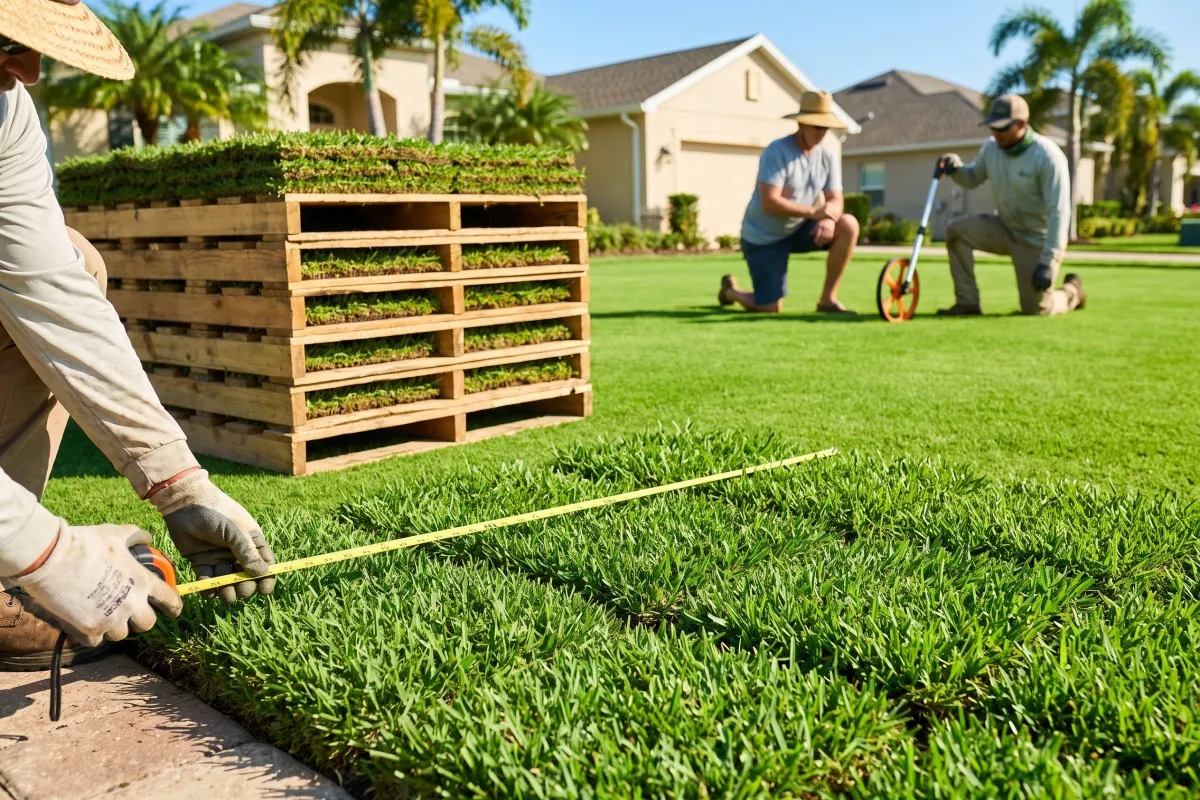
How Much Sod Do I Need? Measuring Your Tampa Bay Yard the Right Way
How much sod do I need? Measure your Tampa Bay yard the way our crews do: rectangles, deductions, a waste factor, then pallets.
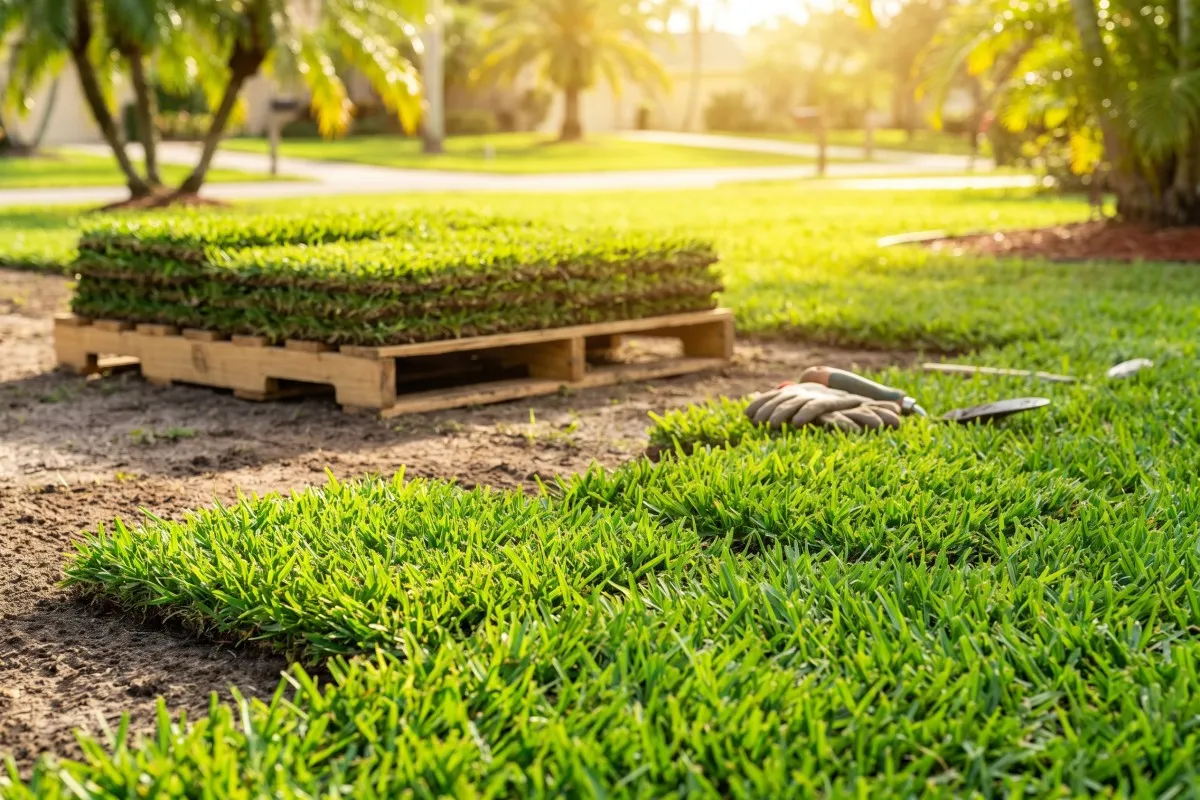
DIY Sod Installation vs. Hiring a Pro in Tampa Bay: What Florida Homeowners Should Really Know
DIY or professional sod installation in Tampa Bay? Here is the real cost, the grower's own warning, and the three prep steps that decide if sod lives.