
Why We Choose Sand-Bottom Sod Over Muck-Bottom Sod
Most Central Florida yards are sandy — and the soil your sod is grown on matters more than you'd think. Here's why sand-bottom sod roots faster, drains better, and lasts longer.
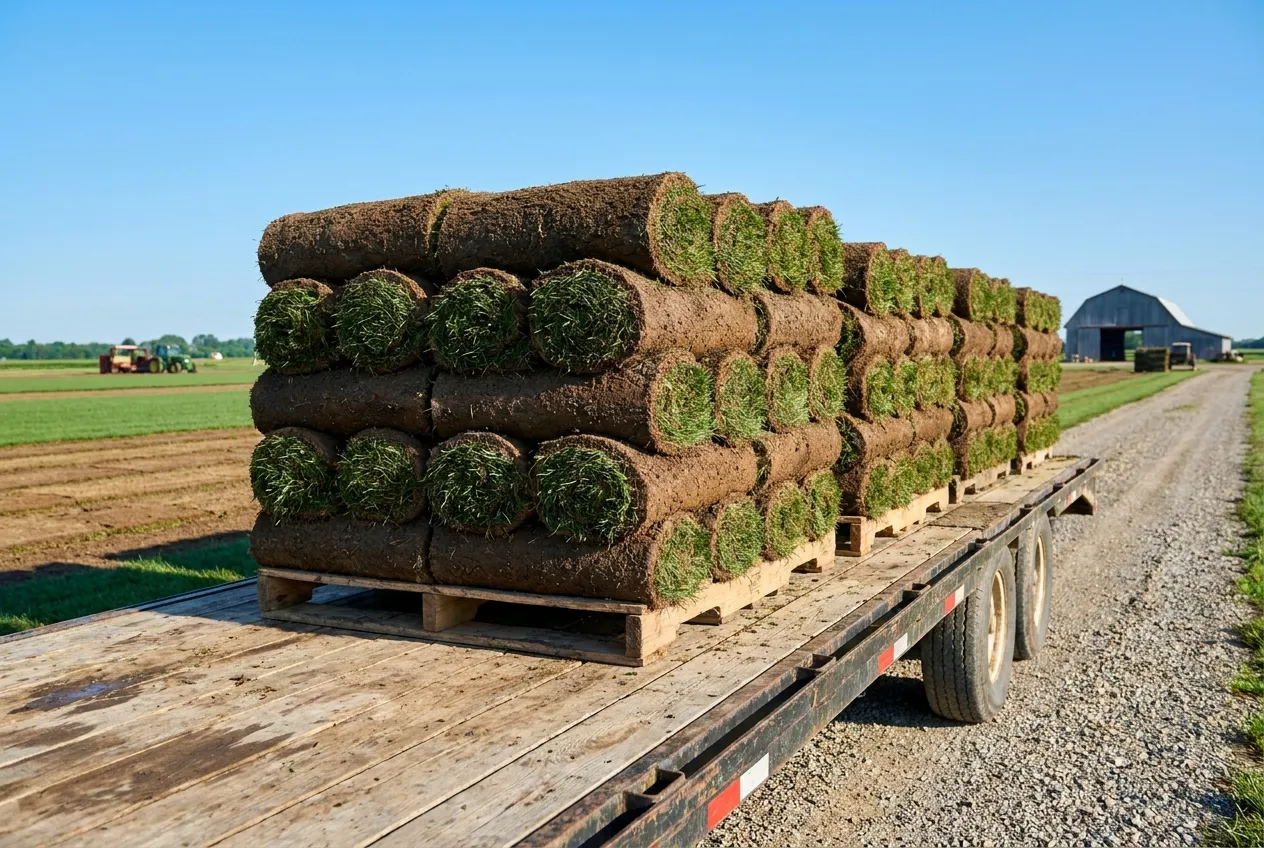
Central Florida’s warm, humid climate and frequent rains make it ideal for lush lawns — but choosing the right sod is crucial for long-term success. One key distinction is the soil base the sod is grown on: sand-bottom sod (grown on sandy soil) or muck-bottom sod (grown on organic-rich muck, often from areas near Lake Okeechobee). Both create an instant green lawn, but sand-bottom sod offers real advantages for most Central Florida homeowners, whose yards typically feature sandy soils.
As Clint, the owner here at Instant Green Sod, often puts it: if you didn’t know any better and you put a pallet of muck next to a pallet of sand-grown sod, the muck can look thicker and greener at first — but that’s not the whole story.
Soil compatibility with sandy terrain
Central Florida’s soils are predominantly sandy. Sandy soils provide excellent aeration and let roots penetrate deeply, but they drain quickly and hold fewer nutrients. Sand-bottom sod is grown on a similar sandy base, so when it’s laid it integrates seamlessly with the underlying soil — avoiding the “layering” effect you get with muck.
Muck-bottom sod introduces a dense, organic layer that can act as a barrier on top of sandy soil. That mismatch can cause water to pool at the interface between the muck and the sand, leading to poor root penetration or uneven settling. In the Tampa Bay area, where sandy soils dominate, sand-bottom sod ensures a uniform soil profile and a more stable lawn.
Faster establishment and deeper roots
The goal after installing sod is quick establishment so it can withstand Florida’s heat, drought, and pests. Sand-bottom sod’s roots are accustomed to sandy conditions, so they extend deeper and faster into your home soil, developing a superior root system in that critical first year. Deeper roots reach water and nutrients more efficiently, reducing how often you need to irrigate.
Muck-bottom sod may look thicker and greener at first because of its nutrient-rich base, but it tends to root more slowly and shallowly on sandy soils. Its organic content holds moisture, which can delay deep root development and leave the lawn vulnerable during dry spells.
Better drainage, less disease
Florida’s heavy summer rains and high humidity create perfect conditions for fungal disease and root rot. Sand-bottom sod’s porous base drains quickly, keeping oxygen in the root zone and reducing the risk of diseases like take-all root rot and gray leaf spot.
Muck’s water-retentive properties can make those problems worse on sandy soils, where excess moisture lingers. For homeowners dealing with frequent downpours, sand-bottom sod’s drainage means healthier turf with fewer fungicide interventions.
Stronger pest resistance and lower upkeep
Pests like chinch bugs, mole crickets, and nematodes are common threats in Florida lawns. Sand-bottom sod tends to see fewer pest issues long-term thanks to its drier root zone and better aeration, which discourage moisture-loving pests.
Muck sod is lighter and easier for contractors to install, but that short-term convenience often comes at the expense of long-term performance in sandy areas. Sand-bottom sod is heavier to handle — but once it’s rooted, it demands less ongoing care, saving you time and money on pest control and watering.
A smart choice for a lasting lawn
Muck-bottom sod has its merits, but for most Central Florida homeowners with sandy soils it isn’t the optimal pick. Sand-bottom sod’s compatibility, faster rooting, superior drainage, and pest resistance make it the better investment for a durable, low-maintenance lawn that thrives here for years to come. It’s what we install — and why.

Fresh-cut sod installation, replacement, and delivery in the Tampa Bay area.
Hook this up to your favourite commenting platform — Giscus, Disqus, or your own.
Continue reading
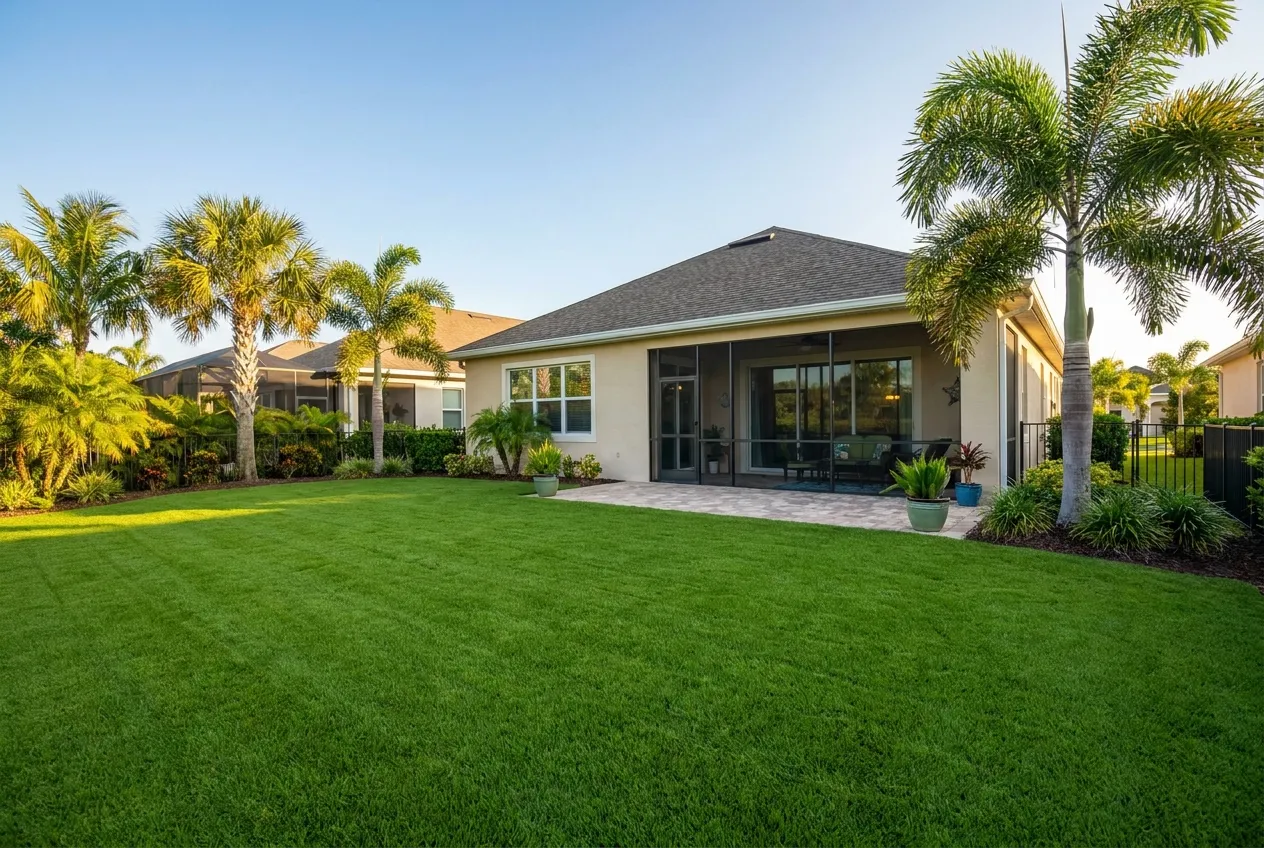
The Green Choice: Why Real Live Sod Beats Artificial Turf in Florida
Artificial turf promises an evergreen look with no mowing — but in Florida's heat, humidity, and storms it creates more problems than it solves. Here's why real sod wins.
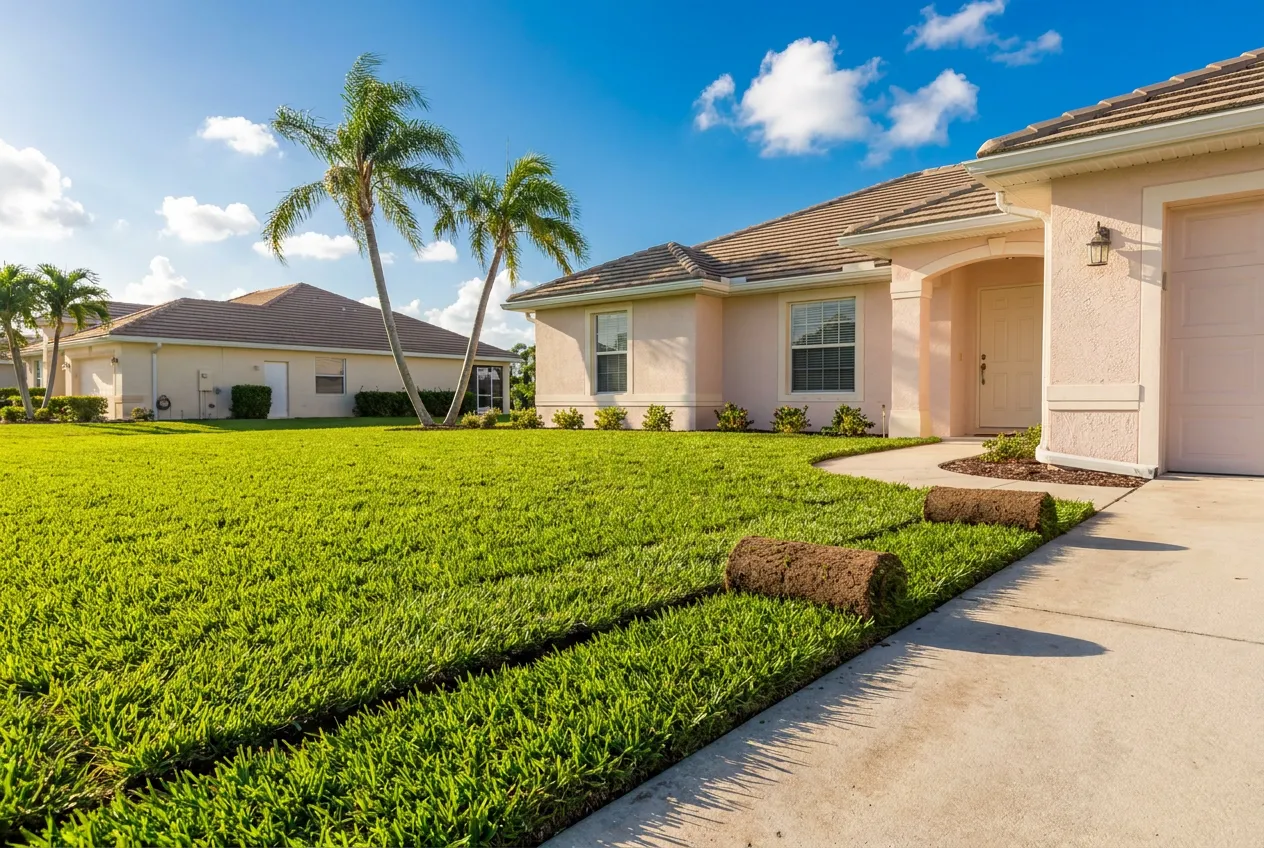
Florida's Rainy Season Is Coming: Protect Your Shady St. Augustine
Too much rain in shady spots is a recipe for lawn fungus. Here are five ways to keep St. Augustine sod healthy and disease-free through Florida's wet season.
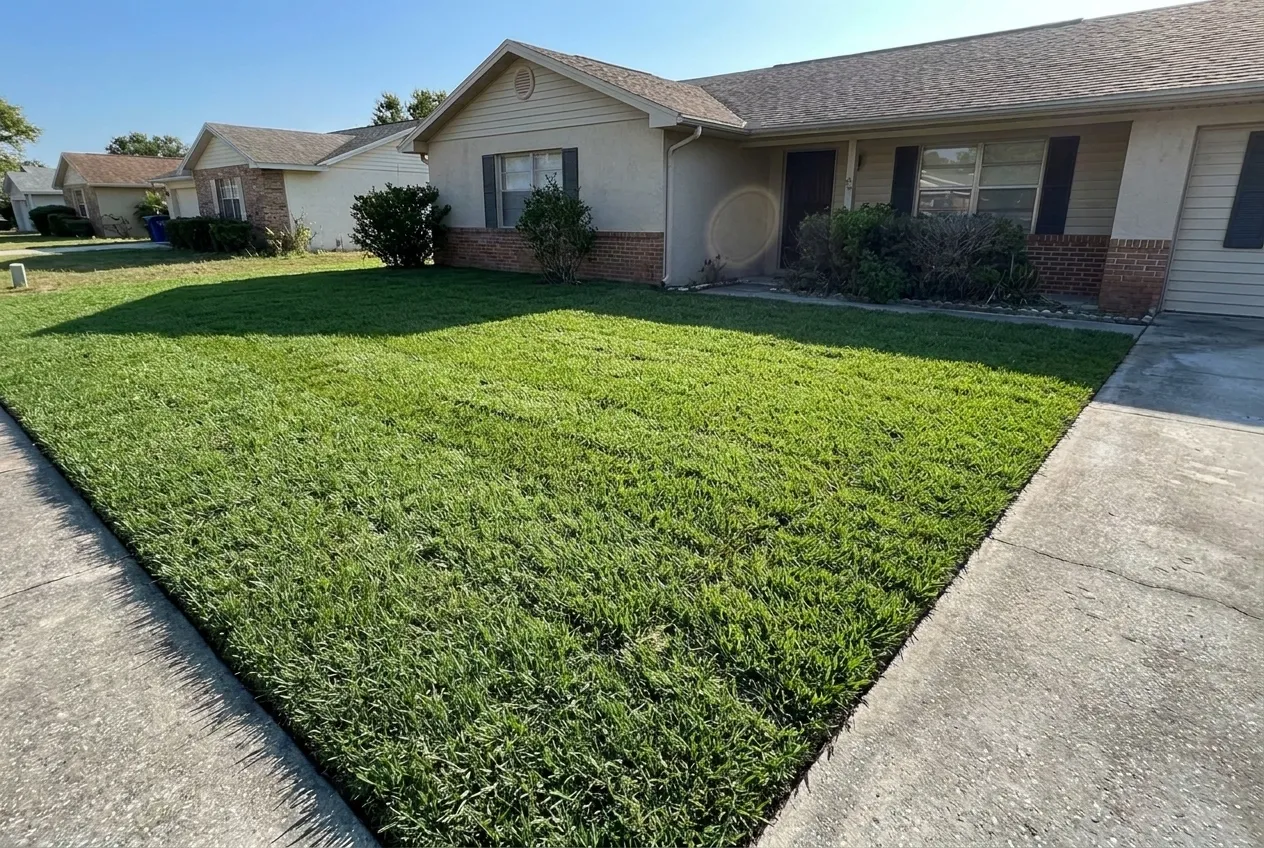
The Evolution of Roundup: What ProVista St. Augustine Owners Should Know
Roundup has removed glyphosate from its lawn-care products — and the replacement chemistry can damage or kill ProVista St. Augustine. Here's how to protect your lawn.