
Lawn Care Before a Hurricane in Florida: Protecting Tampa Bay Sod
Lawn care before a hurricane in Florida: pre-storm mowing, irrigation shut-off, and how we triage waterlogged Tampa Bay sod once the water drains.
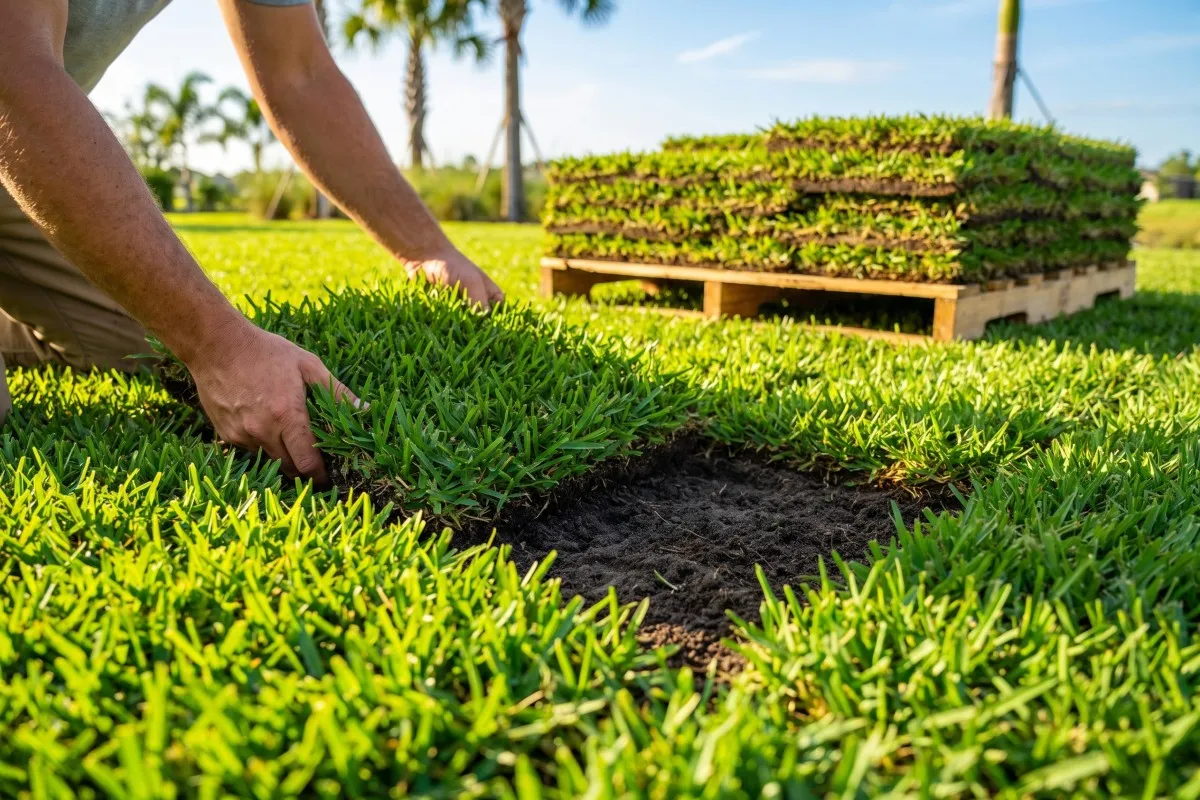
Good lawn care before a hurricane in Florida comes down to two moves you make before the wind arrives: mow at the right time, and shut the irrigation off. Everything after that is triage once the water drains. We install sand-bottom sod across Riverview, Brandon, and the yards in between, and the calls we get every September come from homeowners who put real money into a new lawn and now watch a storm spin up in the Gulf. This is the plan we walk them through.
Your lawn is more resilient than you think. The grass itself will usually outlast the fence, the screen enclosure, and the patio umbrella. What actually kills turf in a storm is not the wind. It is water. Water that sits on the crown for too many days, and then it is whatever people do to that lawn once the wind is gone and the cleanup starts.
Lawn Care Before a Hurricane: Mow Early, Then Cut the Water
The single best thing you can do is mow two to three days ahead of landfall, at your normal height. That timing lets the clippings settle and start breaking down instead of washing into a soggy mat over the crown. Cutting the day before does more harm than good, and mowing inside 24 hours of arrival is a mistake we see often. Fresh clippings on a flooding lawn clog storm drains and smother the grass underneath. Lawn Love’s hurricane checklist puts the safe window at two to three days out for the same reason.
Do not scalp it. A short, stressed lawn heading into a storm recovers slower than one cut at its normal height. For St. Augustine that means 3.5 to 4 inches. Bag the clippings this once, or rake them up, so nothing loose is left to travel.
Then turn the irrigation off completely. This is where most people slip. A major storm can drop a foot of rain in a day. Hurricane Milton put down 11.43 inches on Tampa and 18.31 inches on St. Petersburg in 24 hours, a total the National Weather Service graded as a 1-in-1,000-year event. Your sprinklers add nothing useful to that. They only saturate the root zone sooner and leave the system exposed to power surges.
Here is the short pre-storm list we give every customer:
- Mow 2 to 3 days out at normal height, then bag or rake the clippings
- Shut off the irrigation controller manually; do not trust the rain sensor to catch a hurricane
- Clear the lawn of anything loose so debris does not gouge the turf or block drains
- Move potted plants and furniture off the grass to stop crushing and shading
- Photograph the lawn while it is healthy, in case you file a claim later
That last step matters more than it sounds. A clear before-photo is the cleanest evidence you have if a fence section or a tree lands on the sod.
During the Storm: Sandy Soil Is Working in Your Favor
There is nothing to do while it is blowing, so this is worth understanding beforehand. Tampa Bay sits in USDA hardiness zones 9b to 10a, where warm-season grasses stay in active growth for most of the year and never fully go dormant. That is good for recovery. A lawn that is still metabolizing can push new roots the moment conditions improve.
Our region’s sandy soil is the other advantage. We install sand-bottom sod grown on sandy ground rather than muck precisely because it matches Central Florida’s native profile and drains fast. When 10 inches of rain falls on a sand base, it moves down and out far quicker than it does through the dense organic muck that some growers ship. Faster drainage means the crown of the grass spends fewer hours submerged, and hours submerged is the number that decides whether turf lives.
That advantage has a limit. Sand drains water it can reach. If your yard has a low corner, a compacted pad, or a spot where the grade sends runoff to pool, that water sits regardless of what is underneath. Knowing your low spots before the storm tells you exactly where to look first when it clears.
After the Storm: The First 48 Hours Decide a Lot
Once it is safe to walk the yard, move fast on standing water and debris. Turf submerged in warm floodwater is on a clock. Research on flooded lawns finds that substantial turf loss begins after about four days of continuous submersion, and that water temperature is the biggest factor. In Florida’s late-summer heat, floodwater sits at 80 degrees or higher, and grass can die in only a few days at that temperature. Getting the water moving off the crown is the priority, not mowing, not fertilizing.
Silt and debris come next. UF/IFAS, in its guide Promoting Turf Recovery Following a Hurricane, is direct about this: any layer of mud or silt two inches or deeper should come off as soon as possible, because it blocks the sunlight the grass needs to restart. Lift larger debris by hand. Skim mud with a flat shovel, then rinse the leaf blades with a stream of fresh water to wash off the film. If your lawn took saltwater intrusion from a surge, flush the soil heavily with fresh water to push the salt down past the roots.
One quiet mistake does more damage than the storm. Heavy equipment, trucks, and repeated foot traffic across saturated soil compacts it badly, and compacted sandy soil loses the very drainage that makes it work. Keep vehicles and trailers off the grass during cleanup. If a tree crew has to come through, ask them to lay plywood over their path.
Hold off on watering. UF/IFAS and multiple extension services advise waiting several days before resuming any irrigation, since the soil is already at capacity. Let it drain and breathe first.
When Waterlogged Turf Recovers on Its Own, and When It Does Not
Most flooded Tampa Bay lawns come back without replacement, and the timeline is knowable. Once the water recedes, watch for green tissue. If new growth appears within 7 to 10 days, the turf is recovering and your job is patience, not intervention. Stay off it while it is soft, keep the mower parked until the soil firms up, and resist the urge to fertilize a stressed lawn.
Standing water that lingered past that window tells a different story. Turf that sat submerged for more than 7 to 10 days is usually gone, and no amount of watering brings it back. The same is true for sections buried under thick silt or scorched by concentrated saltwater. At that point you are looking at repair, not rescue.
The size of the dead area sets the fix. A few isolated brown patches often close on their own as surrounding runners fill in, and our guide on diagnosing and repairing bare and brown spots walks through the field tests that tell drought stress from disease from dead roots. When a whole low zone drowned out, plugs or fresh slabs of matching sod are the honest answer. We cut sod fresh right before installation and can put it down the same day, and because Tampa Bay grass grows nearly year-round, there is no wrong season to replace a storm-killed patch. A November repair roots in just as well as an April one.
Watch for fungus in the weeks after, too. All that trapped moisture in warm weather is exactly what brown patch and gray leaf spot wait for, the same pattern we cover in our Florida rainy season lawn care guide. If discolored rings or greasy patches show up after the yard dries, treat them as disease, not lingering flood damage.
The Lawn Is Worth Protecting on Purpose
A hurricane is not something you fight. You prepare for it calmly on the front end, you clean up carefully on the back end, and the lawn that comes through is almost always the one whose owner did those two unglamorous things and then had the patience to wait. Mow early, kill the water, clear the debris fast, and give a submerged lawn its 7-to-10-day window to declare itself before you decide anything. If it comes to that decision and part of your lawn did not make it, that is what we are here for. Walk your yard with us, and we will tell you honestly what will recover and what needs fresh sod.

Fresh-cut sod installation, replacement, and delivery in the Tampa Bay area.
Continue reading
Why Is My New Sod Turning Yellow? Troubleshooting the First 30 Days in Florida
New sod turning yellow in Florida? Learn the three causes in the first 30 days and a simple decision path to adjust water, treat, or call your installer.
7 Sod Installation Mistakes Tampa Bay Homeowners Make (And How to Avoid Them)
The 7 sod installation mistakes Florida homeowners make most, what each one looks like weeks later, and how our Tampa Bay crews avoid every one.
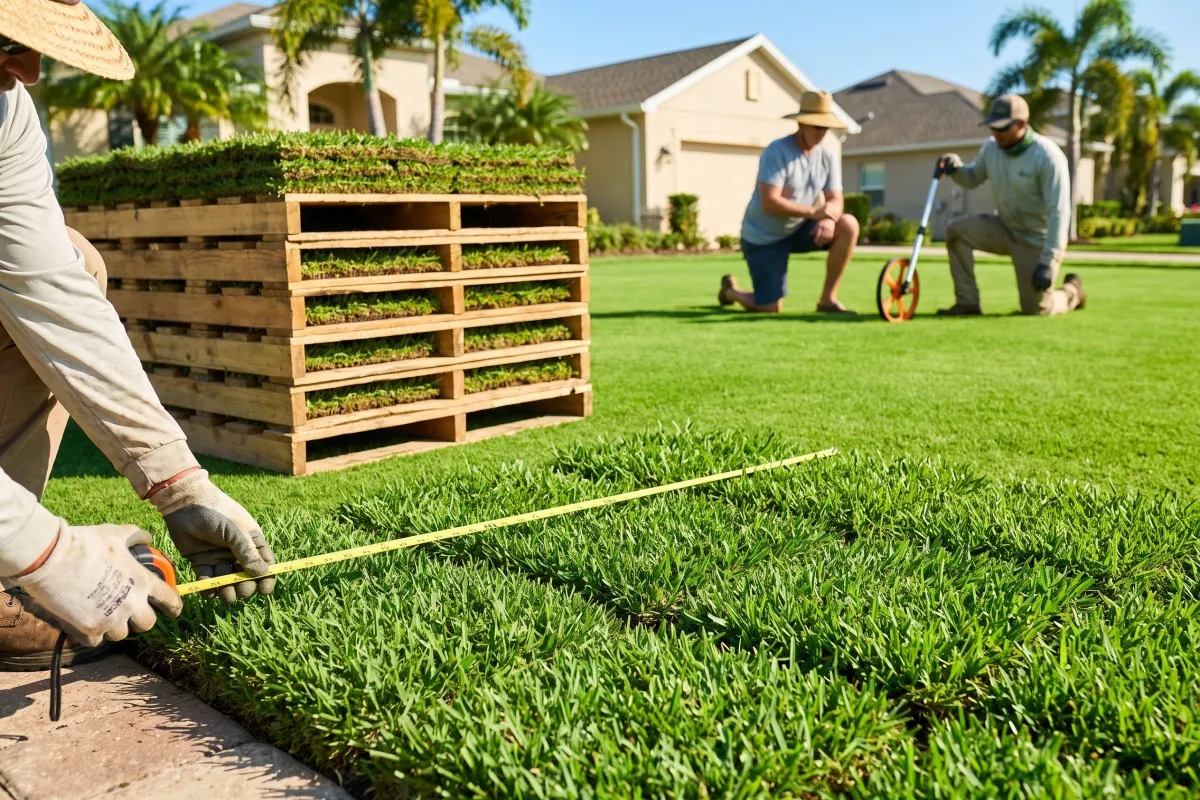
How Much Sod Do I Need? Measuring Your Tampa Bay Yard the Right Way
How much sod do I need? Measure your Tampa Bay yard the way our crews do: rectangles, deductions, a waste factor, then pallets.