
Why St. Augustine Sod Is the Number One Choice for Tampa Bay Area Homeowners, and the Different Varieties Available to Help Fit Their Needs
Why St. Augustine is the number one sod choice for Tampa Bay area homeowners — and the different varieties available to fit your yard's needs.

St. Augustine sod is the number one choice for Tampa Bay area homeowners, and the different varieties available make it possible to match the grass to almost any yard condition in this region. No other warm-season grass covers the full range of Tampa Bay’s growing conditions as reliably — persistent heat, high humidity, coastal salt exposure, and the partial shade that mature oaks and palms cast across most residential lots. Getting both questions right — why St. Augustine, and which cultivar — will determine how well your lawn performs for the years ahead.
Why St. Augustine Dominates Tampa Bay Lawns
St. Augustinegrass (Stenotaphrum secundatum) is the most commonly used lawn grass in Florida, according to the University of Florida Institute of Food and Agricultural Sciences (UF/IFAS). Its dominance is not a matter of marketing — it is a function of fit.
Heat and humidity tolerance. Tampa Bay sits in USDA Hardiness Zones 9b–10a. Summer daytime highs routinely exceed 90°F with humidity that pushes the heat index higher. St. Augustine grows most aggressively between 80°F and 100°F and handles sustained heat and moisture far better than cool-season grasses, which would simply fail here, and better than several warm-season alternatives that show heat stress in peak summer.
Shade tolerance. This is St. Augustine’s defining advantage in Tampa Bay. Most residential lots have mature live oaks, palms, or neighboring structures that cast meaningful shade. Bermudagrass requires six to eight or more hours of direct sun and thins rapidly under tree canopy. Zoysia tolerates more shade than Bermuda but still struggles in denser or shifting shade patterns. St. Augustine, depending on the variety, stays healthy with as little as four hours of direct sunlight per day — a threshold that covers the majority of residential yards in this region.
Salt tolerance. Tampa Bay is coastal. Properties near the bay, along tidal creeks, or within a few miles of saltwater deal with salt spray and occasionally brackish irrigation. UF/IFAS notes that St. Augustinegrass has relatively good salt tolerance, a trait tied to the grass’s origins along the coastal Gulf of Mexico — the same environment Tampa Bay homeowners live in.
Establishment speed. Freshly laid St. Augustine sod roots into Tampa Bay’s sandy soils quickly — typically within two to three weeks during warm months. Tampa’s long installation season (February through December in most years) means there is almost no wrong window to lay sod, outside of brief cold spells.
How It Compares to the Alternatives
A fair comparison against the other grasses commonly available in Tampa Bay:
Bermuda grass produces a dense, traffic-hardy turf in full sun and goes dormant and brown in winter. It cannot hold up in shade — a disqualifying trait for most suburban Tampa Bay lots with any tree coverage. Shade tolerance ranks St. Augustine above Zoysia above Bermuda, from greatest to least.
Zoysia has appeal: soft texture, reasonable drought resistance, and moderate shade tolerance. It fills in slowly from sod, often taking a full growing season to fully cover. In shaded areas where a shade-matched St. Augustine cultivar would hold, a Zoysia typically thins. It also costs more and is available from fewer local suppliers.
Bahia grass is extremely low-maintenance and thrives in open, infertile, dry conditions. Its coarse texture and sparse growth habit make it unsuitable for most residential lawns where appearance matters. It belongs on large rural lots, not neighborhood front yards.
For most Tampa Bay homeowners with a standard residential lot, St. Augustine covers the widest range of conditions at a competitive price point.
Why St. Augustine Sod Is the Number One Choice for Tampa Bay Area Homeowners and the Different Varieties Available to Help Fit Their Needs
The term “St. Augustine sod” covers several distinct cultivars, each bred with specific trade-offs in mind. Selecting the right variety for your yard’s conditions matters as much as selecting the species itself.
Floratam
Floratam is the market standard. Co-developed by UF and Texas A&M University, it accounts for approximately 69 percent of Florida’s sod production — a figure that reflects its reliable performance in full-sun conditions across the state.
Floratam grows fast, establishes quickly, handles high heat well, and is the most widely available and least expensive St. Augustine variety in Tampa Bay. If your yard receives six or more hours of direct sun daily and you want a variety that roots in quickly at a sensible price, Floratam is the default choice.
Its limitations are shade performance and pest resistance. Below four to five hours of direct sun, Floratam thins and becomes patchy. It was originally released with chinch bug resistance, but that resistance has eroded over time — Floratam is now susceptible to southern chinch bug damage, a persistent pest pressure across Tampa Bay’s suburban lawns during hot, dry summer periods.
Palmetto
Palmetto was developed as a shade-tolerant alternative to Floratam. It produces a finer, softer leaf texture, a denser canopy, and a richer green color. It handles partial shade significantly better than Floratam and shows improved cold tolerance — useful during Tampa Bay’s occasional January cold snaps.
For yards with significant oak canopy, western exposures blocked by neighboring homes, or areas that receive four to six hours of sun rather than a full day, Palmetto is often the more practical choice. It carries a modest price premium over Floratam and is widely available through Tampa Bay suppliers.
CitraBlue
CitraBlue is a variety developed by UF/IFAS that carries a specific, well-documented advantage over the rest of the St. Augustine field: it has the best chinch bug resistance of any commercially available St. Augustine cultivar. In Tampa Bay, where chinch bugs are a consistent summer threat — particularly in stressed, dry patches of lawn — that resistance translates to fewer treatment cycles and lower turf-failure risk over time.
Beyond pest resistance, CitraBlue offers good shade tolerance and a distinctive blue-green color. It is available through select suppliers. For homeowners who have dealt with chinch bug damage in a previous lawn planting, CitraBlue is the first variety to evaluate.
ProVista
ProVista is a genetically enhanced cultivar with one feature that stands out from the rest: its reduced vertical growth rate allows homeowners to cut mowing frequency by up to 50 percent compared to traditional St. Augustine varieties. Over a Tampa Bay growing season that runs nine to ten active months, that reduction is meaningful in both time and cost.
ProVista also offers improved shade tolerance and a deep, dark green color. One specific care note: the herbicide chemistry in certain consumer Roundup formulations changed in recent years, and the newer active ingredients can damage or kill ProVista sod. Our post on what ProVista St. Augustine owners should know about Roundup covers that in detail before you reach for a weed-control product.
ProVista carries a premium price and is stocked by fewer suppliers than Floratam or Palmetto — but for homeowners who want to reduce mowing without sacrificing appearance, it is worth sourcing.
Seville and Bitterblue
Seville is a dwarf cultivar with fine texture and strong shade tolerance, suited to smaller or heavily shaded yards where a compact, slow-growing turf is desirable. Bitterblue is one of the older commercial cultivars, offering a dense, blue-green habit and moderate shade tolerance — though it has been largely supplanted in the local market by newer options like CitraBlue and Palmetto. Both remain available through some suppliers but are not commonly stocked.
Matching Variety to Your Yard
Three factors drive the decision:
-
Sun exposure. Count the hours of direct sun hitting the majority of your lawn. Six or more hours: Floratam (best value) or CitraBlue (pest resistance) or ProVista (lowest mow frequency). Four to six hours: Palmetto, CitraBlue, or ProVista. Under four hours: Palmetto or Seville — and some areas under dense canopy will not support any St. Augustine variety and are better treated as shade garden beds.
-
Pest history. If a previous lawn failed due to chinch bugs, CitraBlue is the clearest answer.
-
Soil compatibility. Tampa Bay yards are predominantly sandy, which matters when sourcing sod. Sod grown on muck or organic soil creates a layering mismatch when laid over native sand, slowing root establishment and drainage. Our post on sand-bottom versus muck-bottom sod explains the difference and why it affects how quickly a new lawn takes hold.
Installation and First-Year Care
St. Augustine sod can go in any month in Tampa Bay, with March through June offering the fastest establishment — warm soil temperatures and increasing natural rainfall support root development from day one. Fall installations also perform well and give sod time to anchor before the following summer’s peak stress.
The first 30 days after installation are the most critical. Keep new sod moist but not waterlogged: once or twice daily for the first week, tapering to three times per week as roots establish. After that, mature St. Augustine’s irrigation needs follow a normal local schedule.
During Florida’s rainy season, shaded areas need attention — sustained moisture under tree canopy creates favorable conditions for brown patch and gray leaf spot. Managing that risk before it develops is straightforward; our post on protecting shady St. Augustine through the wet season covers the five steps that matter most.
St. Augustine is Tampa Bay’s dominant lawn grass for good reason: it fits the climate, tolerates the full range of conditions in this region, and holds up through a long growing season. The variety question is a matter of matching the grass’s specific strengths to your yard’s specific conditions. Get that match right, start with fresh sod from a reputable local source, and the lawn handles the rest.
Get a free quote if you would like a specific variety recommendation for your yard.
Hook this up to your favourite commenting platform — Giscus, Disqus, or your own.
Continue reading
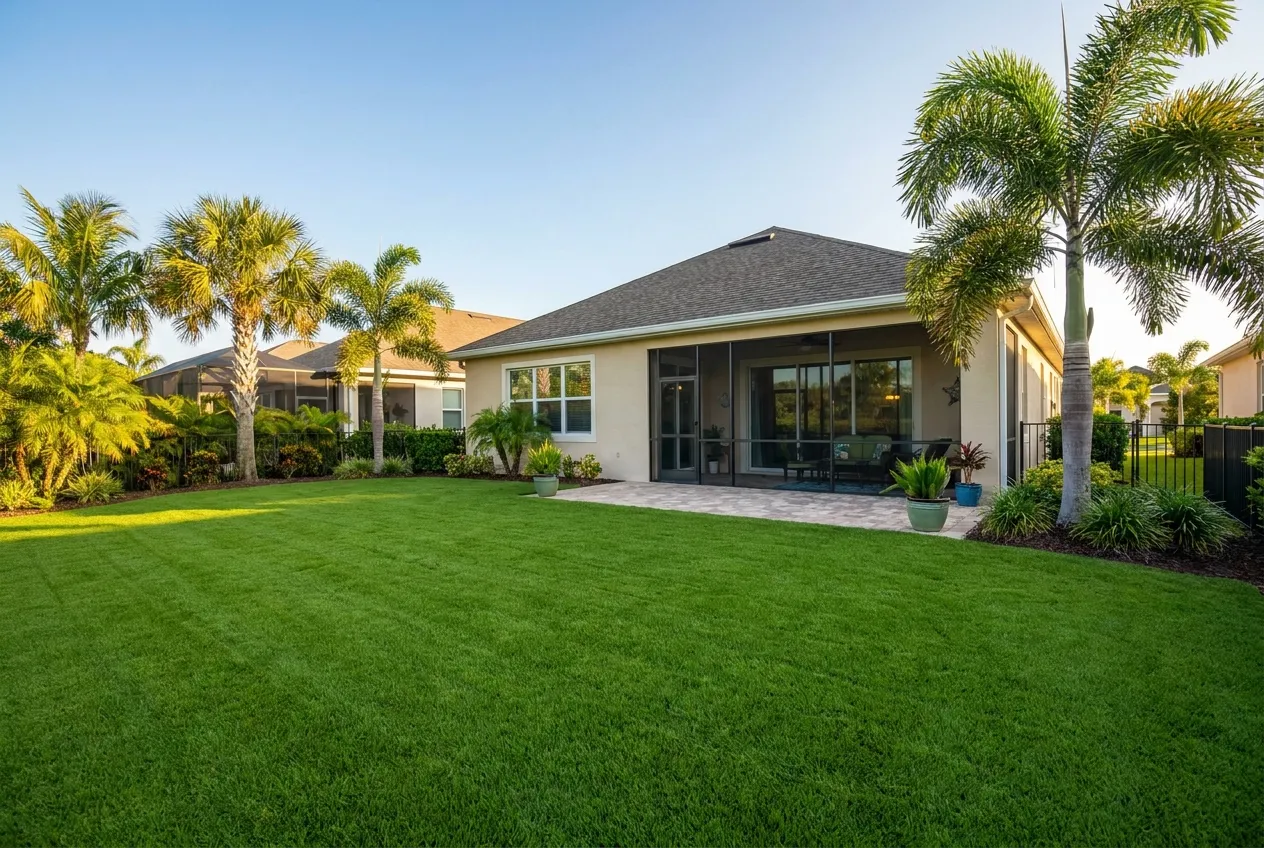
Real Sod vs. Artificial Turf in Florida: Why Natural Sod Wins
Artificial turf is marketed as low-maintenance and always green — but for most Tampa Bay homeowners, natural sod is the better investment. Here's an honest comparison.

Why We Choose Sand-Bottom Sod Over Muck-Bottom Sod
Most Central Florida yards are sandy — and the soil your sod is grown on matters more than you'd think. Here's why sand-bottom sod roots faster, drains better, and lasts longer.
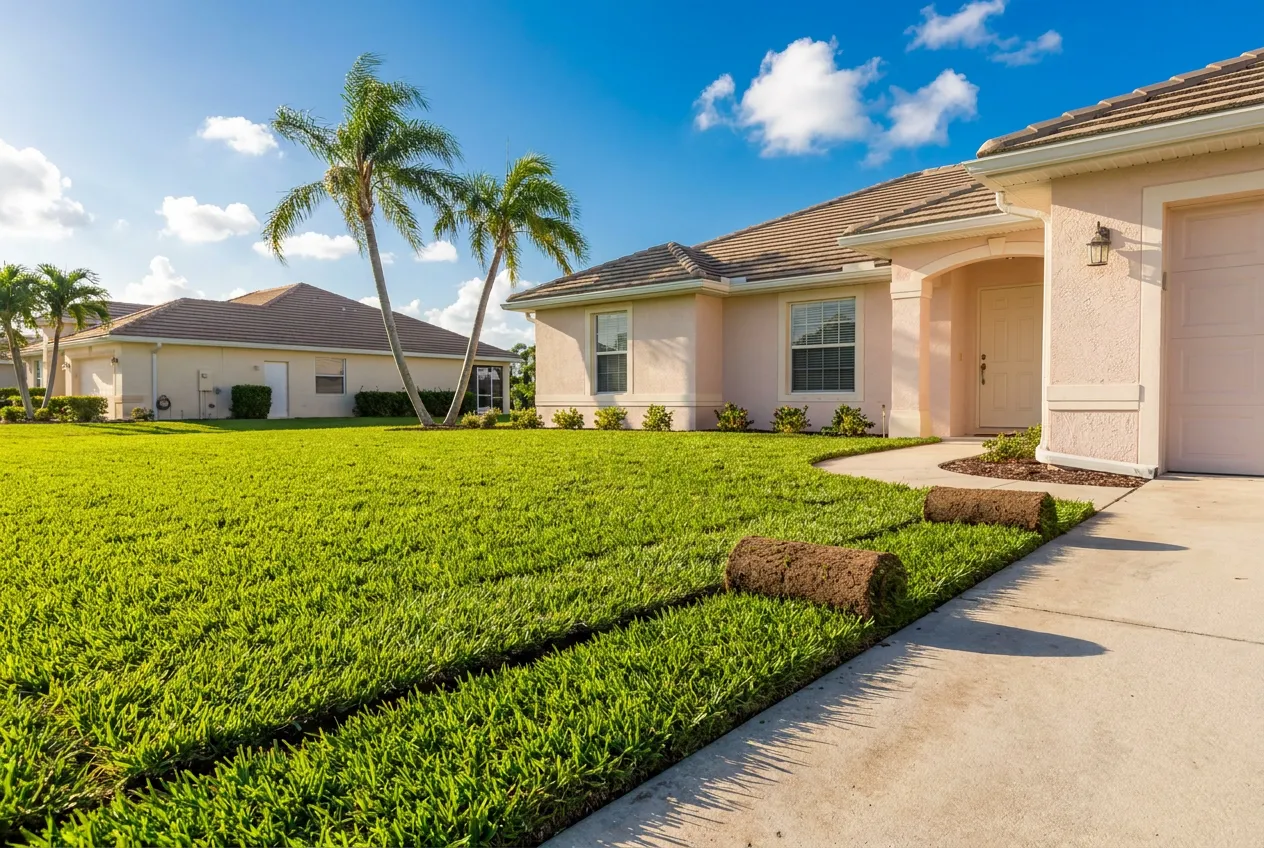
Florida's Rainy Season Is Coming: Protect Your Shady St. Augustine
Too much rain in shady spots is a recipe for lawn fungus. Here are five ways to keep St. Augustine sod healthy and disease-free through Florida's wet season.